

An updated MyPerioPath® Antibiotics Guide is now in effect following our most recent clinical review. These periodic reviews are an essential part of our commitment to evidence-based care, ensuring the recommendations outlined in the report reflect the most current evidence and published literature. As a result, you may notice minor adjustments in some of the antibiotic options recommended, intended to support effective treatment while promoting thoughtful, responsible use.
In particular, we are increasingly aligning the systemic antibiotic option with shorter, evidence-based courses of systemic antibiotics. This change reflects a growing body of research and national antibiotic stewardship guidance.(1)
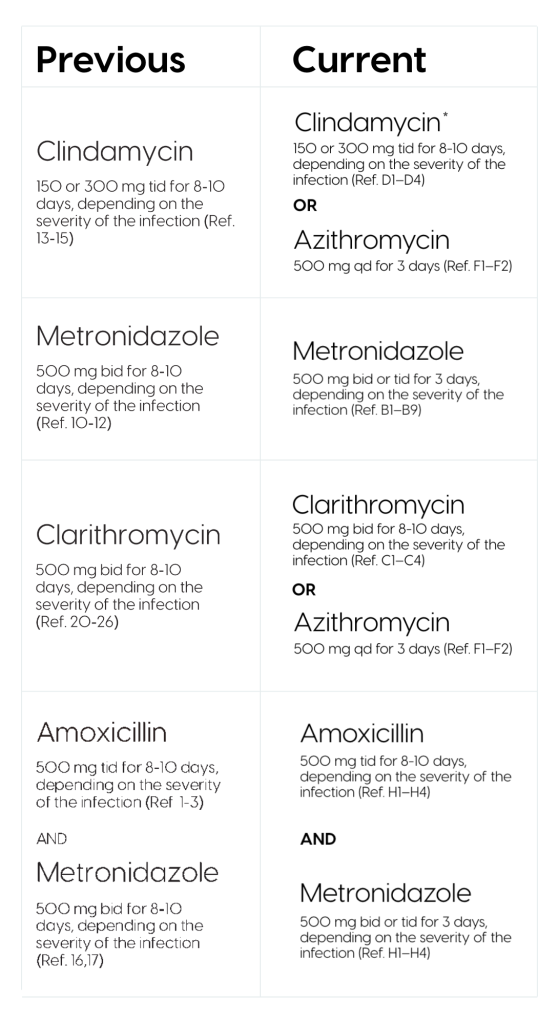
Traditionally, many antibiotic courses were prescribed for fixed durations such as 8 or 10 days. Over the past decade, large clinical trial outcomes and systematic reviews have consistently shown that shorter courses are just as effective for many common infections when prescribed appropriately.(2,3) As a result, clinical guidelines worldwide are shifting away from “longer is safer” toward “the shortest effective duration.” Our updated antibiotic options reflect this change – especially for those needing Metronidazole along with an alternative choice to use Azithromycin.
Research has demonstrated several important benefits of shorter antibiotic courses:
-
- Equal effectiveness: For many infections, shorter courses lead to the same rates of clinical cure as longer ones, provided the correct antibiotic is chosen and the infection is responding.
- Fewer side effects: Antibiotics can cause nausea, diarrhea, thrush, allergic reactions, and — in some cases — serious complications such as Clostridioides difficile infection. Reducing duration lowers these risks.
- Reduced antibiotic resistance: The longer bacteria are exposed to antibiotics, the greater the selection pressure for resistant strains. Shorter courses help preserve antibiotic effectiveness for the future.
- Better adherence: Patients are more likely to complete shorter courses correctly, improving real-world outcomes.
- Clinical judgement remains central — duration may be extended if a patient is not improving as expected. Longer courses will continue to be used for infections where evidence supports them.
Alongside decisions about treatment duration, careful consideration must also be given to antibiotic selection. This is especially important for antibiotics with more serious potential side effects, including clindamycin.
Clindamycin remains an option to consider as it is a useful antibiotic in selected situations. However, it requires clinical judgement before prescribing. It carries a black box warning due to its strong association with Clostridioides difficile infection, which can cause severe, life-threatening colitis.(4) Importantly, clindamycin is not banned. It still has a role in specific clinical circumstances. Its use should always be deliberate, clearly justified, and limited to the shortest effective duration. By reserving clindamycin for cases where the benefits clearly outweigh the risks, we can reduce avoidable harm to patients while supporting responsible antibiotic stewardship and preserving this antibiotic for situations where it is truly needed.
The updates to the MyPerioPath Antibiotic Options represent a subtle but important step toward safer, more sustainable antibiotic use. Many antibiotics may impact/interact with other medications and may produce adverse side effects. We encourage clinicians to review the manufacturer warnings for any contraindications, or consult with the patient’s physician if there are concerns with the selected antibiotic regimen–informed conversations are a vital part of good antibiotic stewardship.
It’s also important to note that the antibiotic options included on the MyPerioPath® report are customizable. If you prefer not to have antibiotic recommendations included, they can be removed at your discretion. This adjustment can be easily made directly from the test order page, allowing you to tailor the report to best support your clinical preferences and workflow. Please note that antibiotic options are not available to appear on the report for providers practicing in New York due to NYDOH regulations.
To view the full, updated Antibiotic Options Resource, click here or visit the Training Resources section of your OralDNA Provider Portal.
References:
- https://iris.who.int/server/api/core/bitstreams/86435a2d-33ac-4813-a1c6-d018ce39e439/content
- https://pubmed.ncbi.nlm.nih.gov/29679383/
- https://pubmed.ncbi.nlm.nih.gov/39881797/
- https://www.accessdata.fda.gov/drugsatfda_docs/label/2020/050162s102lbl.pdf

Diane’s holistic approach is enriched by her extensive knowledge of nutrition, seamlessly integrating it into her practice. Proudly rooted in the Midwest, she makes her home in Minnesota with her husband, where she continues to contribute meaningfully to the dental community, driven by a deep commitment to excellence and patient care.
- Update to MyPerioPath® Antibiotic Options: What You Need to Know - January 2, 2026
- Why Test? Rethinking Periodontal Disease Through a Medical Lens - August 1, 2025
- Practicing Dental Medicine: The Partnership with a Clinical Laboratory - December 13, 2024