

Dr. McGlennen: What inspired you to pursue a career in dental hygiene, and what do you find most rewarding about it?
Mohini: I pursued a career in dental hygiene because I was drawn to having a career involved in directly helping patients improve their daily habits and long-term health. I enjoy working directly with patients, am detail-oriented, and have a strong interest in periodontal care. The most rewarding aspect is empowering patients to feel more confident about themselves as well as more comfortable in my dental chair. Dental hygiene is a field that allows for the perfect work-life balance as I can continuously learn and provide support to my patients while also pursuing my own goals outside of work.
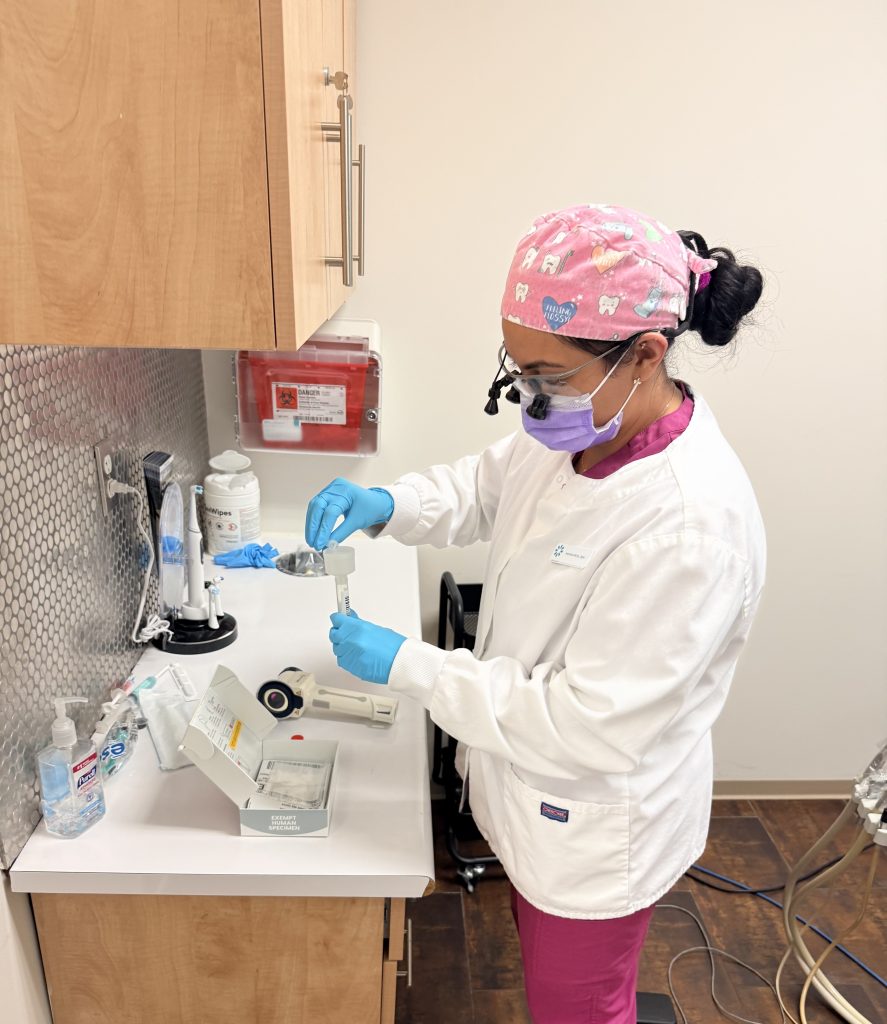 Dr. McGlennen: How has incorporating salivary diagnostics into your practice changed the way you approach patient care? Can you share a memorable success story?
Mohini: Incorporating salivary diagnostics into our practice has allowed me to tailor treatment plans for patients in a more personalized way. I am able to help patients better manage their periodontal disease and identify specific pathogens involved in their oral health. With the involvement of salivary diagnostics we can easily stay more proactive with their periodontal care rather than reactive. This allows patients to be more active in managing their own health, as well as build healthy relationships with their clinicians by encouraging engagement and more open conversations. It is important to stay informed and up to date on hygiene techniques, and that includes incorporating salivary diagnostics with patients.
Dr. McGlennen: What advice would you give to other RDHs who are hesitant to adopt salivary diagnostics in their practice?
Mohini: Adopting salivary diagnostics is an easy way to help guide your clinical decisions. By having a platform at your disposal that serves as a tool to enhance treatment planning and link the mouth-body connection, you can provide patient education and identify disease risks for patients. Since oral and systemic health go hand-in-hand, this allows clinicians to identify issues early on and promote awareness of the importance of the oral-systemic link. By utilizing salivary diagnostics, patients can take an active role in their oral health through co-diagnosis, which in turn improves their compliance with recommended care.
Dr. McGlennen: When you’re not helping patients achieve better oral health, what hobbies or activities do you enjoy in your free time?
Mohini: Outside of the operatory, I enjoy working out at the gym and trying new restaurants. Sushi and Thai food are some of my go-to picks when going out to eat. Puzzles and watching new shows on Netflix are my favorite pastimes.
Dr. McGlennen: What excites you most about the future of dental hygiene and how salivary diagnostics can contribute to it?
Mohini: With the strong connection between oral and systemic health, I am eager to come across new and innovative dental hygiene techniques and treatments. With the incorporation of salivary diagnostics we can identify risks prior to them becoming larger issues. Salivary diagnostics reveal risks before symptoms appear, allowing us to move from simply detecting disease to predicting and preventing it. New innovations within dental hygiene are helping reshape the future of the field and the way patients view their oral health.

- RDH Spotlight: Mohini Patel - January 16, 2026