
Last week, we explored the awakening that comes from seeing the unseen. This week, Jonathan dives into the hard truth: a technically perfect Scaling and Root Planing (SRP) doesn’t always equal success. We’ll see how embracing an outcome-focused mindset changes not just the approach to care, but the results and the satisfaction hygienists and patients alike experience.
The Hard Truth: Great SRP With Bad Outcomes Is Not a Win
This is where my mindset truly flipped. I had to admit to myself:
-
- A beautifully executed SRP with minimal, short-lived change in a patient’s disease status is not a success.
- It’s just a well-performed procedure.
That stung. Because I take pride in my hands. My technique. My charts. My consistency.
But OralDNA® exposed the gap between what I was doing and what was actually changing. I started seeing patterns:
-
- Cases where I felt like I absolutely crushed the treatment… but the retest still showed high levels of key pathogens.
- Cases where we dialed in the protocol—irrigation, laser-assisted bacterial reduction, antimicrobials, probiotics, recall frequency and home care—and you could literally watch the pathogen profile shrink and stabilize on the report.
Same hygienist. Same hands. Different information. Different plan. Completely different outcomes.
How Being Outcome-Focused Looks in My Operatory Now
Here’s what being outcome-focused—truly outcome-focused—looks like in my world today:
My mental scorecard has changed.
I still care how many quads of SRP I complete. But I care more about:
-
- How many patients showed a meaningful reduction in high-risk bacteria.
- How many bleeding sites actually shut down and stayed down.
- How many retests show we’re on the right track—or expose that we’re not done yet.
I don’t guess anymore. I test.
If you’re perio or medically high-risk, we’re talking an OralDNA saliva test. Not as a gadget. Not as a sales pitch.
As a standard of care for clarity.
-
- I’m more honest with myself and with patients.
If the pathogen profile hasn’t shifted enough, I don’t high-five myself for a “great cleaning.” I dig deeper:
-
- Did we miss something?
- Do we need to adjust the plan?
- Is the patient ready to step up at home?
I get more satisfaction from the long game than from the one visit.
Don’t get me wrong—I still love a clean root surface. That will never change.
But what lights me up now is pulling that retest, seeing the changes, and knowing:
We didn’t just work hard. We made a real difference.
The Bottom Line: OralDNA Didn’t Just Change My Protocol. It Changed My Mind.
If I had to sum up the shift, it’s this:
Old mindset: “If I do more treatment, I’m more successful.”
New mindset: “If my patients are healthier, more stable, and better informed—and I can prove it—we’re successful.”
OralDNA gave me the missing piece to live in that second mindset with confidence. It took my frustration with “starting over every recall” and turned it into a structured, trackable, outcome-driven approach.
I stopped measuring my value only by the procedures I completed.
I started measuring it by the outcomes my patients carry out the door.
And once you see it that way, there’s really no going back.
If you’re a hygienist or dentist feeling that same quiet frustration—working hard, doing “all the things,” but not seeing enough lasting change—this is my honest take: It might not be your hands. It might be your scorecard.
OralDNA helped me rewrite mine. And in the process, it reshaped my entire career from treatment-focused… to outcome-obsessed.
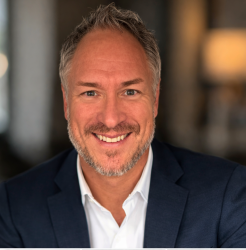
Through the integration of OralDNA testing, periodontal protocols, and outcome tracking, he helps transform hygiene from a routine service into a diagnostic-driven system that changes patient health.
Jonathan is the founding voice of LJ Prime and author of The Prime Awakening, where he explores the principles of presence, resilience, and intentional growth—both in clinical practice and in life.
He is committed to raising clinical standards, challenging outdated approaches, and equipping teams with the tools to deliver measurable, meaningful results.
- From Cleaning to Cause: How Salivary Testing Changes the Patient Conversation - July 24, 2026
- Most of My Career, I Measured the Wrong Thing (And How OralDNA Forced Me to Change My Scorecard) – Part Two - May 1, 2026
- Most of My Career, I Measured the Wrong Thing (And How OralDNA Forced Me to Change My Scorecard) – Part One - April 24, 2026